Written by Polly Bedford, Director at Coppice & Crown
Short answer: yes, if you want a floor that lasts for generations and you’re planning to look after it. Solid oak costs more upfront than engineered, it needs fitting and finishing properly, and it isn’t right for every budget or every subfloor. Here’s what it really costs, what you get for the money, and when we’d tell you to think again.
We’re Coppice & Crown, a family-run business in North Devon, established in 1979. We take English-grown oak from tree to floorboard in our own workshop, some of it from our own family woodlands. We only make solid wood floors, so we’re not neutral, but we’d rather you bought the right floor than the wrong one from us.
What is solid oak flooring?
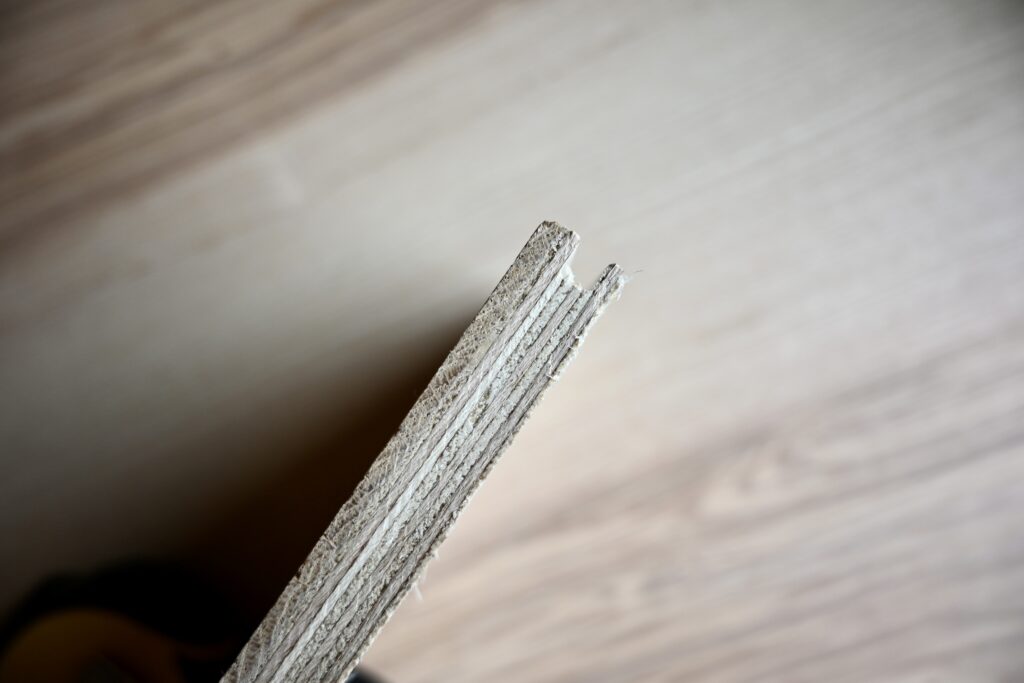
Each board is a single piece of oak through its full depth. Ours contain no glues, dyes or chemicals. An engineered board is built in layers: a thin oak veneer bonded to a core, usually plywood or fibreboard.
We’ve written more about this in solid wood flooring vs engineered flooring.
Solid oak vs engineered oak at a glance
| Our solid oak | Engineered oak | |
|---|---|---|
| Made from | One piece of British oak | Oak veneer on a plywood or fibreboard core |
| Thickness | 21mm Classic, 23mm Heritage | Varies |
| Lifespan | 100+ years | Often 20–30 years, longer with a thick wear layer |
| Sanding | Many times | Limited by the veneer |
| Underfloor heating | Yes | Yes |
| Upfront cost | Higher | Lower |

How much does solid oak flooring cost?
Our oak flooring costs:
- Classic Oak: £95 per m² + VAT
- Heritage Oak: £125 per m² + VAT
We supply the boards planed and unfinished, with UK-wide delivery. So your total budget has three parts:
- The boards. We make mixed widths as standard, and can offer a single width up to 350mm and lengths up to 4.3m.
- Fitting and finishing. This can range from £30 to £200 per m², depending on the finish you want and who you use. We only supply, but we can recommend good fitters.
- Subfloor preparation. Repairing or levelling what’s underneath can add cost.
Example: a 20m² living room in Classic Oak comes to £1,900 + VAT for the boards, or roughly £2,500 to £5,900 with fitting and finishing, before VAT on the boards. In Heritage Oak, it’s £2,500 + VAT for the boards, or roughly £3,100 to £6,500 with fitting and finishing, before VAT on the boards.
Your exact figure depends on the room, your fitter, your finish and your subfloor. Our estimator on each product page will give you a starting point: Classic Oak or Heritage Oak.
What do you get for the extra money?
Time. The evidence is under our feet: historic British homes still have original wood floors that are hundreds of years old. Read more on why solid wood lasts.
A floor you can renew. When it’s worn, or you fancy a change, you can sand it back and refinish it. Damaged boards can be replaced individually too.
A floor that gets better with age. Marks and patina become part of its character, as you can see in what our floors look like after five years.
Traceable timber. Our oak is Grown in Britain certified and traceable, and we mill, season and kiln dry it ourselves in Devon.
Heritage or Classic: which oak should you choose?
We don’t sell our oak by the usual Prime, Select and Rustic grades. We make two distinct floors.
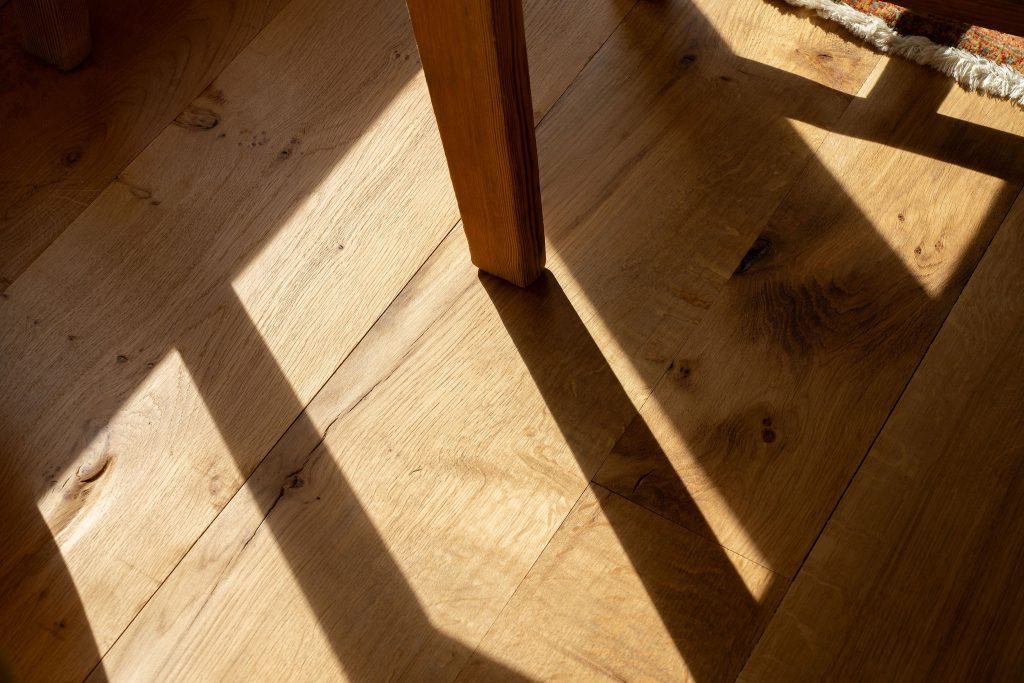
Heritage Oak uses predominantly Cornish and Devon trees, chosen for their character. Expect rolling knots, cat’s paws, an undulating texture and a proportion of inactive woodworm holes, which give the look of a truly aged floor. It suits older and listed homes and barn conversions, and everyday marks blend in well. 23mm thick.
Classic Oak is its sleeker sister: honey and soft straw tones, smaller knots, cat’s paws and medullary rays, with minimal sapwood. It sits easily in contemporary and traditional homes alike. 21mm thick.
Seeing them in your own light is the best way to decide, so order samples of both.
Can solid oak go over underfloor heating?
Yes. You’ll often read that engineered is the only safe choice, but around 75% of our customers lay our floors over underfloor heating. It comes down to how the timber is prepared and fitted. We season our boards slowly and kiln dry them to around 10% moisture for a lived-in home.
We recommend a surface temperature of no more than 27°C and a gradual increase at the start of each heating season. Wide boards can be used too, but they need an experienced installer. Read our full guide to wood flooring over underfloor heating.
When solid oak isn't the right choice
- Your budget is tight. Engineered costs less upfront. If a lower price today matters more than long life, it may be the better buy.
- You’re moving soon. Much of solid oak’s value comes over decades, so you may not see the benefit yourself.
- Your subfloor is damp, uneven or unsound. Sort that first. Any wood floor needs a stable base. If you’re laying over concrete or over existing floorboards, check what’s involved.
- You have no room for the height. A new floor raises the level, which can affect doors, skirting and thresholds.
- You want a perfectly uniform, unchanging floor. Wood moves with humidity, and it marks and mellows over time. If you’d see that as a fault rather than a feature, solid oak may frustrate you.
- You want it ready to walk on straight away. Our boards arrive unfinished, so finishing needs to be part of your plan.
Where does solid oak work best?
Living rooms, kitchens, bedrooms, hallways and home offices are all natural homes for it. It can also go in a bathroom: add an extra layer of your chosen finish to protect it from moisture, and ask us for advice on finishing for damper rooms.
How do you look after it?
- Sweep or vacuum regularly, as grit acts like sandpaper
- Wipe up spills straight away, and use a damp mop, never a wet one
- Use a pH-neutral wood floor cleaner
- Put felt pads under furniture, and lift heavy pieces rather than dragging them
See our full guide to caring for hardwood flooring.

Is solid oak right for you? 3 quick questions
- Is your subfloor sound and dry, or can you make it so?
- Do you want a floor that lasts well beyond your own time in the house?
- Does the idea of a floor that changes and gains character appeal to you?
If you said yes to all three, solid oak is very likely worth it. If you’re not sure, that’s what we’re here for.
What our customers say
“It’s been such a durable and hardwearing family floor for this home, and it looks beautifully in keeping with the history of this house.” Figtree Farm, Devon, Heritage Oak
For a closer look at a finished floor, take the tour of Heritage Oak in a 16th century Somerset farmhouse.
FAQs
Is solid oak better than engineered oak?
It lasts longer and can be sanded more times, and ours contains no glues. Engineered costs less upfront. If budget is the deciding factor, engineered may suit you better.
How much does solid oak flooring cost per m²?
Our Classic Oak is £95 per m² + VAT and our Heritage Oak is £125 per m² + VAT for the boards. Fitting and finishing can range from £30 to £200 per m², and any subfloor work is extra.
How thick should solid oak flooring be?
Our Classic Oak is 21mm and our Heritage Oak is 23mm.
Does solid oak need to acclimatise before fitting?
Our boards don’t, because they’re already acclimatised. We send you a checklist beforehand to make sure everything at your end is correct.
Do you fit the floors as well?
We only supply, with UK-wide delivery, but we can recommend good fitters.

Order samples or get an estimate
Order samples of our Heritage and Classic Oak, or use the estimator on the Heritage Oak or Classic Oak page.
Prefer to talk it through? Call 07535108962 or email info@coppiceandcrown.co.uk, Monday to Friday, 8.30am to 5pm.